

Nature as a reference
The attentiveness of the mother hen to her nest varies during incubation, leading to changes in temperature, O2 concentration and humidity. By looking at the natural behaviour of the mother hen, it becomes perfectly clear what the needs of developing embryos and hatchlings are. Embryo-Response Incubation™ is based on this philosophy.
Embryo-Response Incubation™ technology listens to the embryo, constantly monitoring its development. By automatically adapting the incubation environment to the needs of each specific batch of eggs, it maximizes the number of top-quality chicks while safeguarding animal welfare.

Embryo-Response Incubation™ by Petersime
- OvoScan™ for the optimum incubation temperature in the setter
- HatchScan™ for the optimum incubation temperature in the hatcher
- CO2NTROL™ for the most advantageous CO2/O2 levels
- Dynamic Weight Loss System™ (DWLS™) for ideal humidity levels
- Synchro-Hatch™ for a reduced hatch window [in use on pre-UniStreamer™ generations]
- HatchSound™ for a reduced and monitorable hatch window
- NestSound™ for enhanced chick welfare
OvoScan™ ensures real-time temperature control in the setter by continuously monitoring the eggshell temperature and adjusting the air temperature accordingly, mimicking how the mother hen controls the temperature of her eggs.
- The system captures the exact eggshell temperature, enabling the setter to:
- Automatically follow the optimal preheating trajectory according to the needs of the specific batch of eggs
- Continuously adjust the air temperature in response to the actual eggshell temperature, ensuring that the core temperature of the embryos does not deviate from the optimum
- Precise control of the embryo’s metabolic development rate
- Higher hatchability, better quality and uniformity, improved post-hatch performance (liveability, growth and feed conversion)
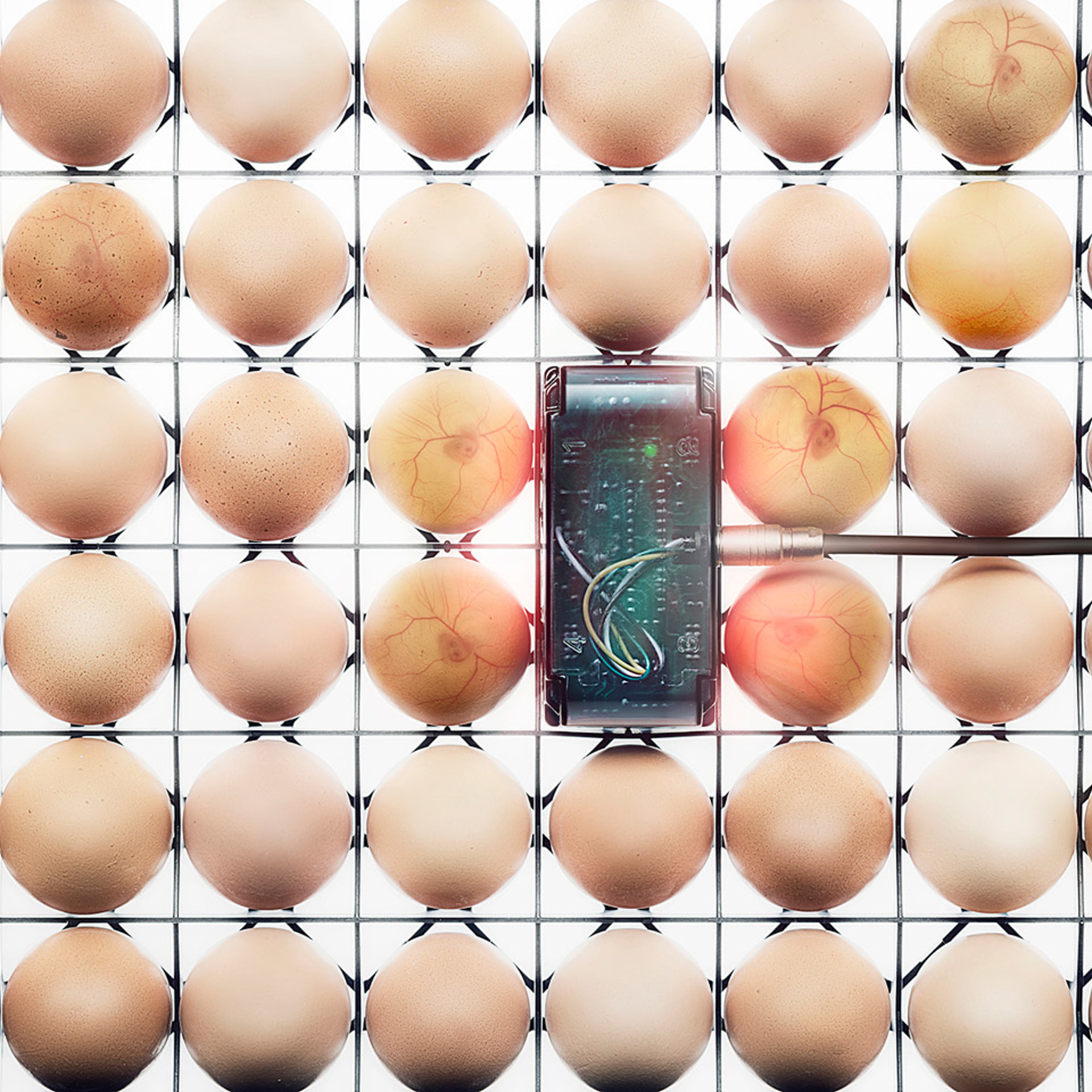
Only when the eggshell temperatures in setter and hatcher are in perfect synergy, the hatcher will enhance and optimize what has been achieved in the setter. HatchScan™ ensures this continuity of temperature control while also safeguarding the comfort of the chicks once they have hatched.
- The system captures the exact eggshell temperature, enabling the hatcher to:
- Automatically start at the optimal air temperature, guaranteeing a 100% smooth thermal transition between the OvoScan™-controlled setter and the HatchScan™-controlled hatcher
- Continuously adjust the air temperature in response to the actual eggshell temperature, ensuring that the core temperature of the embryos does not deviate from the optimum
- After the intense hatching process, the system controls the ambient temperature directly in the basket, ensuring the environment is ideal for the chicks to feel comfortable until trolley pull-out
- Higher hatchability, better quality and uniformity, higher chick comfort, improved post-hatch performance (feed conversion)

To ensure the embryo develops into a healthy chick, oxygen must enter the egg and carbon dioxide must leave it as a waste product. CO2NTROL™ automatically provides the optimal CO2/O2 levels, mimicking the natural gas exchange in the nest.
- By monitoring the CO2 level inside the incubator and steering the level of ventilation, the system automatically sets the CO2 concentration at the correct level for each phase of the incubation process
- Beneficial effect on the development of the circulatory system and embryo growth during the setter phase
- Precisely timed CO2 stimulation during the hatcher phase leading to simultaneous pipping and hatching
- Better quality (improved cardiovascular system, stronger skeleton, better muscle development) and uniformity

Eggs need to lose the correct amount of water (weight) so the embryos can build the internal air cell needed for pulmonary respiration. DWLS™ automatically adjusts the humidity levels to achieve this in a way that imitates the humidity levels an embryo experiences when incubated naturally by the mother hen.
- By measuring the egg weight loss during incubation, the system automatically adjusts the humidity level in the setter to achieve the desired weight loss trajectory
- Correct air cell size for the embryos
- Higher hatchability, improved post-hatch performance (liveability, feed conversion)
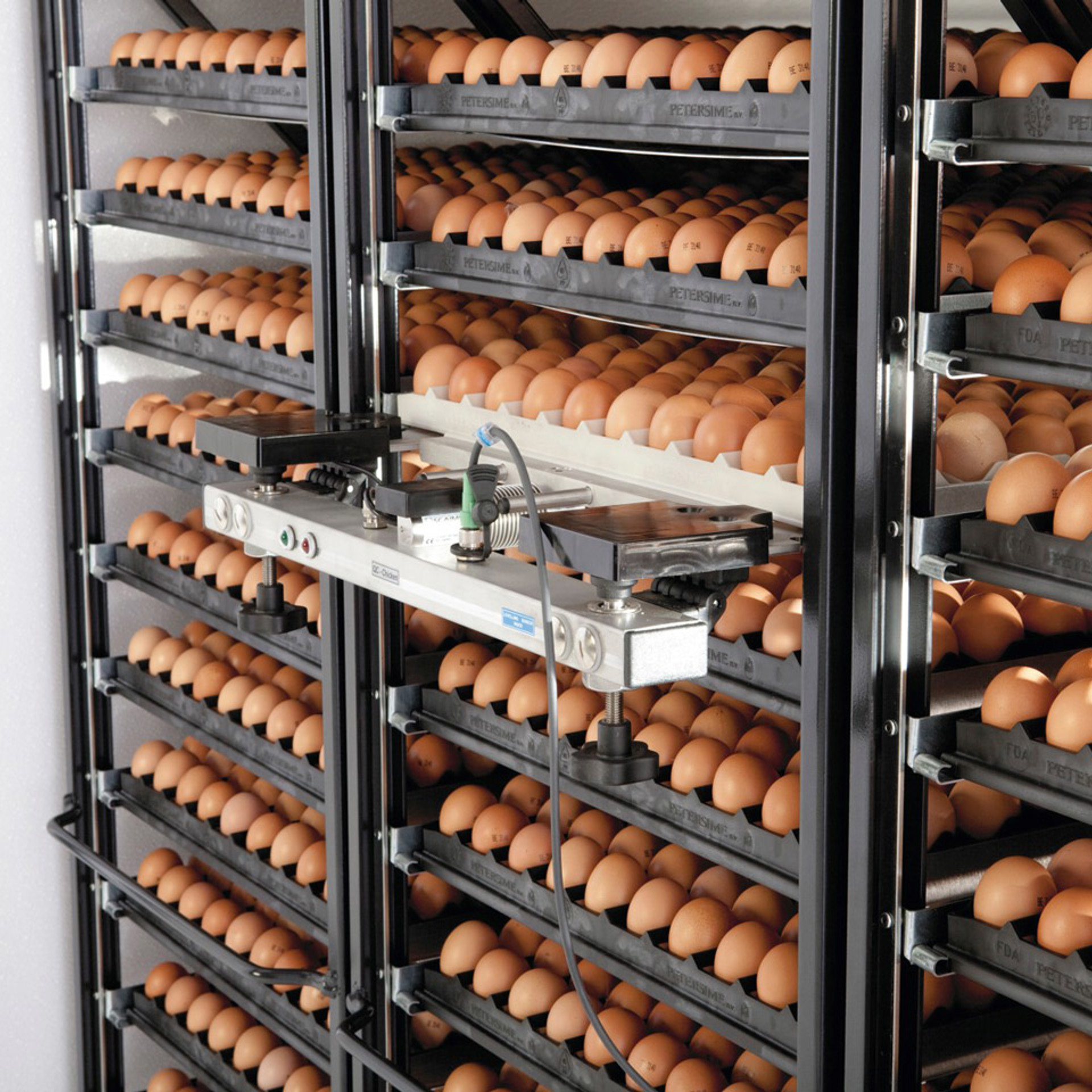
Synchro-Hatch™ gives the embryos the same stimuli they would experience in nature, generating the right environment for the chicks to hatch simultaneously.
- A sensor is attached to the chick baskets and detects vital signals of the developing embryos
- The system uses these signals to initiate a sequence of temperature and CO2 triggers to stimulate simultaneous hatching
- Narrow hatch window, higher hatchability, better quality and uniformity, improved post-hatch performance

HatchSound™ detects and analyses hatch-related sounds produced by the embryos to accurately determine the start and end of the hatching cycle. Thanks to its built-in Synchro-Hatch™ technology, it reduces the hatch window by mimicking natural stimuli.
- Microphones capture specific embryo sounds that provide insights into hatch progression
- Based on real-time information, the system precisely times and applies temperature and CO2 triggers to stimulate simultaneous hatching
- At take-off, the controller’s on-screen information provides a clear visualization of the hatch window spread
- Narrow hatch window, accurate hatch window monitoring, higher hatchability, better quality and uniformity, improved post-hatch performance

The mother hen can instinctively tell if her chicks are comfortable by listening to their vocalizations. Similarly, by measuring the vocalizations new-born chicks make, NestSound™ automatically and continuously monitors the comfort level of chicks stored inside the UniStreamer™ Chick-Store.
- Based on the call detection algorithm, the Chick-Store controller’s on-screen information dynamically displays the chicks’ comfort levels, making it easy to monitor their well-being. The information is also remotely accessible via smartphone, tablet or pc. This enables immediate intervention whenever the chicks require attention
- Thanks to the history reporting function, it is possible to document the comfort levels the chicks experienced during their storage time at the hatchery
- Optimal chick comfort, enhanced chick welfare

Constant interaction between embryo & incubator


